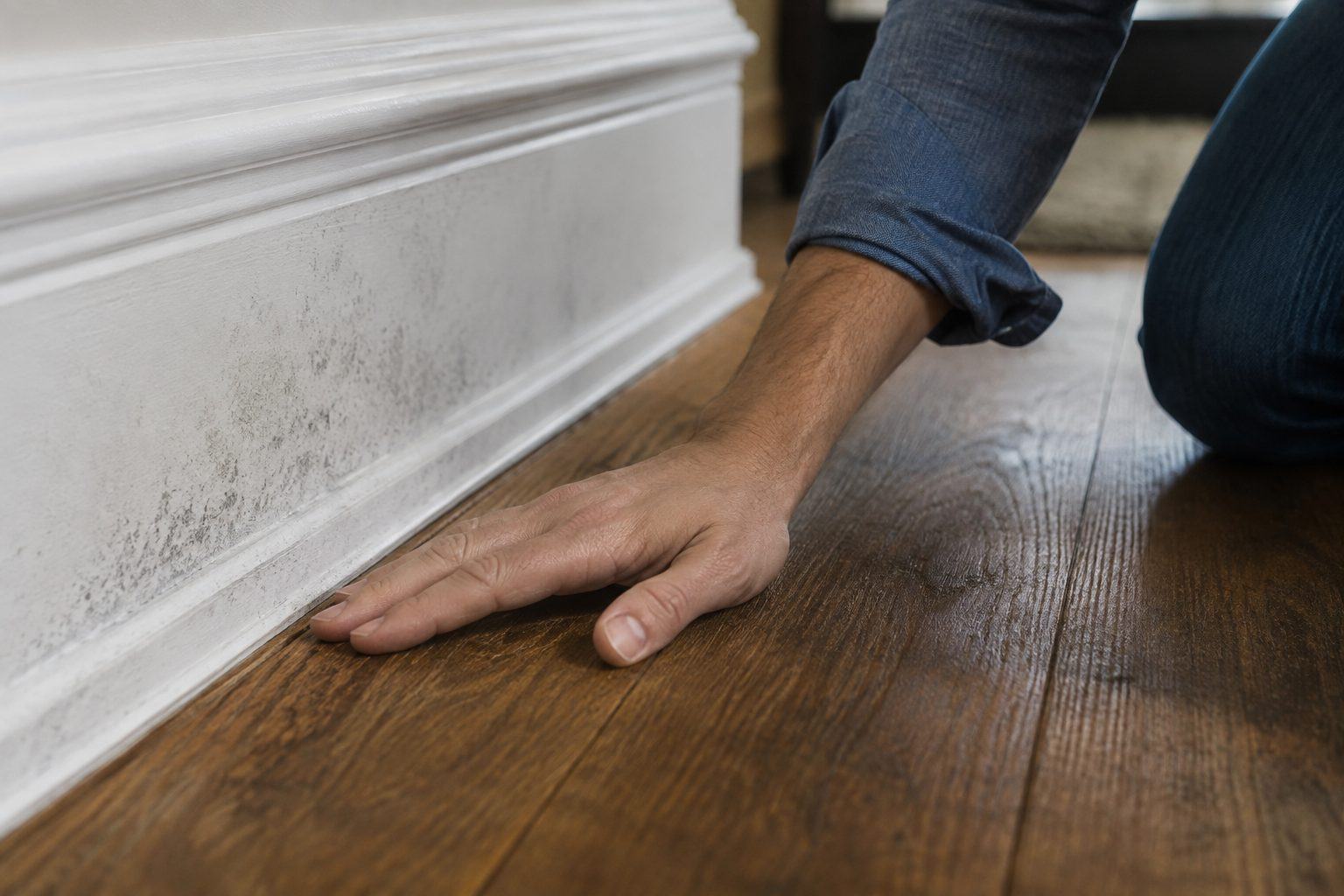
8 Signs Your Richmond Home Needs Crawl Space Encapsulation
Most crawl space problems show up upstairs first. Here's what to look — and smell — for.
1. A Musty or Earthy Smell
This is usually the first thing homeowners notice, and it's often strongest near the floor or right after rain. It's typically caused by mold, mildew, or damp organic material in the crawl space, and it travels upward into living space through what's called the "stack effect" — air from the crawl space rises and mixes with the air you breathe throughout the house.
2. Cold or Uneven Floors in Winter
If your floors feel cold even with the heat running, or certain rooms never seem to warm up, an unconditioned crawl space below is a common cause. Without insulation at the foundation walls, the crawl space stays close to outside temperature, and that cold transfers straight up through the subfloor.
3. Visible Mold on Joists or Subfloor
If you look under the house and see dark, spotted, or fuzzy discoloration on the wood framing, that's mold — and it needs to be treated, not just sealed over. Left alone, it continues to spread and can eventually compromise the wood itself.
4. High Indoor Humidity or Foggy Windows
An unsealed crawl space is one of the largest sources of unwanted humidity in a home. If your air conditioning runs constantly in summer but the house still feels sticky, or your windows fog up more than they should, moisture from below may be working against your HVAC system.
5. Sagging or Bouncy Floors
Chronic moisture weakens wood framing over time. If floors feel spongy or noticeably uneven in spots, it can indicate the floor joists or support beams underneath have been affected by long-term moisture exposure.
6. Increased Pest Activity
Damp, dark crawl spaces are attractive to insects and rodents alike. If you're seeing more pest activity than usual — especially near the lowest level of your home — a wet or vented crawl space is a common contributing factor.
7. Rising Energy Bills
An unconditioned crawl space forces your HVAC system to work harder, especially in summer when it has to remove both heat and excess humidity. Sealing and conditioning the crawl space is one of the more overlooked ways to reduce that strain.
8. Visible Condensation on Pipes, Ductwork, or Foundation Walls
Droplets forming on cool surfaces inside the crawl space are a direct sign that humidity is too high in the space — exactly the condition that leads to mold and wood rot over time.
How Many of These Apply to You?
One or two mild signs might just be worth monitoring. Several at once — or anything involving visible mold or standing water — is worth having looked at. A free inspection will tell you exactly what's happening and what, if anything, it would take to fix it.
Not Sure What You're Dealing With?
A free inspection is the fastest way to get a straight answer — no pressure, no obligation.
Request a Free Inspection
No pressure, no obligation. We'll review what you tell us and get back to you with next steps.
Request received.
Thanks — your inspection request has been sent. A local specialist will follow up with you shortly to schedule your free, no-obligation inspection.